ملخص الوحدة السادسة UNIT 6 Staying Healthy | البقاء بصحة جيدة لمادة اللغة الانجليزية للصف الخامس الفصل الدراسي الثاني المنهج العماني

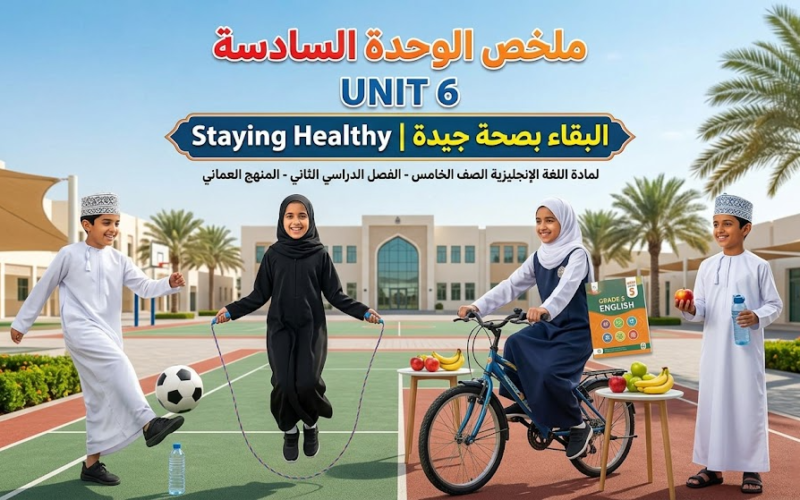
ملخص الوحدة السادسة UNIT 6 Staying Healthy | البقاء بصحة جيدة لمادة اللغة الانجليزية للصف الخامس الفصل الدراسي الثاني المنهج العماني
نقدم لكم ملخص الوحدة السادسة UNIT 6 Staying Healthy | البقاء بصحة جيدة لمادة اللغة الانجليزية للصف الخامس الفصل الدراسي الثاني المنهج العماني
UNIT 6
Staying Healthy | البقاء بصحة جيدة
Unit Overview | نظرة عامة على الوحدة
Unit 6 ‘Staying Healthy’ focuses on illnesses, health vocabulary, giving advice using ‘should/shouldn’t’, visiting the doctor, and understanding healthy lifestyles. Students read about school lunches around the world, learn to use the infinitive of purpose, practise giving health advice, and write about how they stay fit and healthy.
تتمحور الوحدة السادسة ‘البقاء بصحة جيدة’ حول الأمراض، ومفردات الصحة، وتقديم النصائح باستخدام should/shouldn’t، وزيارة الطبيب، وفهم أسلوب الحياة الصحي. يقرأ الطلاب عن وجبات الغداء المدرسية حول العالم، ويتعلمون استخدام المصدر للغرض، ويتدربون على تقديم النصائح الصحية، ويكتبون عن كيفية حفاظهم على لياقتهم وصحتهم.
Lesson 1 – Vocabulary: Illnesses | الدرس الأول – مفردات: الأمراض
Learning Objectives | أهداف التعلم
• Name 12 different illnesses and health problems in English.
• Use ‘I’ve got a …’ and ‘I feel …’ to describe health problems.
• Connect illness symptoms to body parts.
• تسمية 12 مرضاً ومشكلة صحية مختلفة بالإنجليزية.
• استخدام ‘لديّ…’ و ‘أشعر…’ لوصف المشاكل الصحية.
• ربط أعراض المرض بأجزاء الجسم.
Vocabulary: Illness | مفردات: الأمراض
| I’ve got a… / I feel… | العربية | Example / مثال |
| cold | زكام | I’ve got a cold. My nose is runny. |
| cough | سعال | I’ve got a cough. I’m coughing all the time. |
| earache | ألم في الأذن | I’ve got an earache. It’s very sore. |
| headache | صداع | I’ve got a headache. It’s very painful. |
| high temperature | حرارة مرتفعة | I’ve got a high temperature. I feel really hot. |
| rash | طفح جلدي | I’ve got a rash. My skin is getting red. |
| runny nose | سيلان الأنف | I’ve got a runny nose. |
| sore throat | التهاب الحلق | I’ve got a sore throat. It’s difficult to talk. |
| stomachache | ألم في المعدة | I’ve got a stomachache. |
| toothache | ألم في الأسنان | I’ve got a toothache. |
| dizzy | دوخة | I feel dizzy. I must sit down or I will fall! |
| sick | مريض / قرف | I feel sick. |
I’m Learning Tip | نصيحة التعلم
Use your own body to learn illnesses. Say the illnesses and point at your body parts. You will remember the words better. This kinesthetic approach connects vocabulary to physical memory, making recall much faster.
استخدم جسمك لتعلم الأمراض. قل الأمراض وأشر إلى أجزاء جسمك. ستتذكر الكلمات بشكل أفضل. يربط هذا النهج الحركي المفردات بالذاكرة الجسدية، مما يجعل الاسترجاع أسرع بكثير.
Lesson 2 – Story: A High Temperature | الدرس الثاني – القصة: حرارة مرتفعة
Story Summary | ملخص القصة
Sami is at the doctor’s with his mum and Bo (NOT his dad, Lottie and Bo as one activity falsely states). He has a cough and doesn’t have a runny nose. He puts the thermometer under his arm (NOT in his mouth as the activity suggests for correction). Dr Asma (Sami’s doctor – TRUE) examines him. Sami’s real temperature is about 42°C (FALSE – this is a wrong statement in the activity; the temperature is high but the exact number is part of the correction exercise). Dr Asma tells Sami he shouldn’t play football because he’s feeling dizzy and sick, he should be at home (not hospital), he will feel better, and he should get some rest, have a bath and drink plenty of orange juice and water.
سامي عند الطبيبة مع أمه وبو (وليس مع أبيه ولوتي وبو كما تذكر إحدى الجمل الخاطئة). لديه سعال وليس سيلان في أنفه. يضع الميزان الحراري تحت ذراعه (وليس في فمه كما تقترح المسألة للتصحيح). تفحصه الدكتورة أسماء (طبيبة سامي – صحيح). تخبر الدكتورة أسماء سامياً أنه لا يجب أن يلعب كرة القدم لأنه يشعر بالدوخة والمرض، يجب أن يكون في البيت (وليس المستشفى)، سيشعر بتحسن، وعليه الراحة والاستحمام وشرب الكثير من عصير البرتقال والماء.
Values: Helping Others at School | القيم: مساعدة الآخرين في المدرسة
The values activity asks how students should help others when they’re feeling ill at school. Correct behaviours: tell a teacher ✓, be nice to them ✓, listen to them ✓, stay calm ✓. Incorrect: ignore them ✗, play games with them ✗.
يسأل نشاط القيم كيف يجب على الطلاب مساعدة الآخرين عندما يشعرون بالمرض في المدرسة. السلوكيات الصحيحة: أخبر مدرساً ✓، كن لطيفاً معهم ✓، استمع إليهم ✓، ابقَ هادئاً ✓. الخاطئة: تجاهلهم ✗، العب ألعاباً معهم ✗.
Lesson 3 – Grammar: Should / Shouldn’t | الدرس الثالث – القواعد: should / shouldn’t
Grammar Explanation | شرح القاعدة النحوية
‘Should’ and ‘shouldn’t’ are modal verbs used to give advice or recommendations. They do not change with the subject (no -s for he/she/it).
‘Should’ و ‘shouldn’t’ أفعال مساعدة تُستخدم لتقديم النصائح أو التوصيات. لا تتغير بحسب الفاعل (لا تُضاف -s لـ he/she/it).
| English Structure | البنية بالعربية |
| He should take some medicine. | يجب أن يأخذ بعض الدواء. |
| She shouldn’t ride a bike. | لا يجب أن تركب دراجة. |
| Should Hazim do some sport? | هل يجب على حازم ممارسة الرياضة؟ |
| No, he shouldn’t. He should drink warm tea. | لا، لا يجب. يجب أن يشرب شاياً دافئاً. |
| What should Maryam do? | ماذا يجب على مريم أن تفعل؟ |
Advice for Common Illnesses | النصائح للأمراض الشائعة
| Person | Problem | Should | Shouldn’t |
| Khalid | Stomachache | Take some medicine, rest | Eat crisps |
| Hazim | Sore throat | Drink warm tea | Ride a bike, eat hard food |
| Rasha | Earache | Drink warm tea | Drink milk |
| Maryam | Toothache | Drink lots of water | Eat hard food, ride a bike |
Lesson 4 – Vocabulary & Grammar: Healthy Lifestyle + Infinitive of Purpose | الدرس الرابع – مفردات وقواعد
Healthy Lifestyle Vocabulary | مفردات أسلوب الحياة الصحي
| English | العربية | Example |
| healthy | صحي | Eating vegetables is healthy. |
| unhealthy | غير صحي | Eating too much junk food is unhealthy. |
| fit | لائق بدنياً | Exercise keeps you fit. |
| unfit | غير لائق بدنياً | If you don’t exercise, you become unfit. |
| balanced diet | نظام غذائي متوازن | A balanced diet has lots of fruit and vegetables. |
| junk food | الوجبات السريعة | Junk food is unhealthy. |
| exercise | تمارين رياضية | I do exercise every day. |
| relax | يسترخي | I read a book to relax. |
Infinitive of Purpose | المصدر للغرض
We use ‘to + infinitive’ to explain why we do something – the purpose of an action.
نستخدم ‘to + المصدر’ لشرح سبب فعلنا لشيء ما – غرض الفعل.
| English Example | الترجمة العربية |
| He’s eating more fruit to have a healthy diet. | يأكل المزيد من الفاكهة للحصول على نظام غذائي صحي. |
| You’re doing exercise to feel healthier. | تمارس الرياضة لتشعر بصحة أفضل. |
| I think I’ll go to the fishmonger’s to buy some squid. | أعتقد أنني سأذهب إلى بائع السمك لشراء بعض الحبار. |
| The children went for a walk to get some fresh air. | ذهب الأطفال في نزهة للحصول على هواء نقي. |
| I go to school to learn. | أذهب إلى المدرسة للتعلم. |
Lesson 5 – Culture: School Lunches | الدرس الخامس – الثقافة: وجبات الغداء المدرسية
Cultural Content | المحتوى الثقافي
This lesson compares school lunch traditions in different countries. Students learn about lunch systems in Japan, South Korea, France, and other countries. In Japan and South Korea, students have rice for lunch. In French schools, they have multiple courses. School lunches are not expensive in many countries. In Japan, students eat in their classroom and clean up afterward.
يقارن هذا الدرس تقاليد وجبات الغداء المدرسية في بلدان مختلفة. يتعلم الطلاب عن أنظمة الغداء في اليابان وكوريا الجنوبية وفرنسا وبلدان أخرى. في اليابان وكوريا الجنوبية، يتناول الطلاب الأرز للغداء. في المدارس الفرنسية، يتناولون عدة أطباق. وجبات الغداء المدرسية ليست مكلفة في كثير من البلدان. في اليابان، يأكل الطلاب في فصلهم ويرتبون بعد ذلك.
Food Vocabulary | مفردات الطعام
beans (الفاصولياء) / fruit (الفاكهة) / meat (اللحم) / rice (الأرز) / soup (الشوربة) / tofu (التوفو)
Comprehension Questions | أسئلة الفهم
1. Which two countries have rice for lunch? → South Korea and Japan.
2. Where are school lunches not expensive? → Japan and many Asian countries.
3. How many courses do they have in French schools? → Multiple courses (starter, main, dessert).
4. Where can you eat lunch in Japan? → In the classroom.
5. What do Japanese children do when they finish lunch? → They clean up.
6. Which country often has tofu and soup for lunch? → Japan.
Lesson 6 – English in Action: At the Doctor’s | الدرس السادس – الإنجليزية في العمل: عند الطبيب
Functional Language | اللغة الوظيفية
| Doctor’s Expression | تعبير الطبيب |
| What’s the matter? | ما المشكلة؟ |
| Where does it hurt? | أين يؤلمك؟ |
| When did you start feeling sick? | متى بدأت تشعر بالمرض؟ |
| I’ll take your temperature. | سآخذ درجة حرارتك. |
| You’ve got a high temperature. | لديك حرارة مرتفعة. |
| You should stay in bed and relax. | يجب أن تبقى في الفراش وتسترخي. |
| You shouldn’t use the computer today. | لا يجب أن تستخدم الحاسوب اليوم. |
| Yes, take this medicine every four hours. | نعم، خذ هذا الدواء كل أربع ساعات. |
Pronunciation: /ɜː/ and /e/ Sounds | النطق: صوت /ɜː/ و /e/
Students find groups of three words with the same sound. /ɜː/ words (circled): word, turtle, Earth, earn, heard, purse, working, letter, curly. /e/ words (underlined): send, healthy, pen, sell, jellyfish, headache, spell. This helps distinguish between two easily confused English vowel sounds.
يجد الطلاب مجموعات من ثلاث كلمات بنفس الصوت. كلمات /ɜː/ (تُحاط بدائرة): word, turtle, Earth, earn, heard, purse, working, letter, curly. كلمات /e/ (تُسطَّر): send, healthy, pen, sell, jellyfish, headache, spell. يساعد هذا على التمييز بين صوتين صائتين إنجليزيين يُخطئ فيهما كثيراً.
Lesson 7 – Reading: 5 Ways to a Healthy Lifestyle | الدرس السابع – القراءة: 5 طرق لأسلوب حياة صحي
Reading Text Overview | نظرة عامة على نص القراءة
The reading text presents five key ways to stay healthy, each with a catchy heading:
يقدم نص القراءة خمس طرق رئيسية للبقاء بصحة جيدة، كل منها بعنوان جذاب:
| Heading | العنوان | Key Content |
| Have fun! | استمتع! | The top tip to be happy is to be nice to your friends and family. |
| Get out and about! | اخرج واستكشف! | Run in the playground, do a sport, or walk to school to stay fit. |
| Eat well, feel well! | كُل جيداً، اشعر بشكل جيد! | A balanced diet means eating the right portions from different food groups. |
| Sleep tight! | نم جيداً! | You should sleep well each night to stay healthy. Make your bedroom calm. |
| Water of life! | ماء الحياة! | Drinking water after exercise gives you energy and makes you feel stronger. |
Comprehension Activities | تمارين الفهم
Activity 1: Complete the sentences so they mean the same (paraphrasing activity): ‘The most important thing to be happy is to be nice to your friends and family.’ → ‘The TOP TIP to be happy is…’ / ‘You should sleep well each night to stay healthy!’ → ‘You should SLEEP TIGHT each night…’
التمرين الأول: أكمل الجمل بحيث تحمل نفس المعنى (نشاط إعادة الصياغة).
Activity 2: Answer 5 questions then match with headings a–e. Questions: What can you do to stay fit? / What’s a balanced diet? / Why is water good for you? / What can you do to relax? / How many hours should you sleep every night?
التمرين الثاني: أجب على 5 أسئلة ثم طابقها مع العناوين أ–هـ.
Lesson 8 – Writing: How I Stay Fit and Healthy | الدرس الثامن – الكتابة: كيف أحافظ على لياقتي وصحتي
Grammar Point: Brackets for Extra Information | نقطة القواعد: الأقواس للمعلومات الإضافية
We use brackets ( ) to give extra information that is not essential but adds detail. Example: ‘Make sure you get plenty of sleep each night (about 9–10 hours).’ The extra information in brackets helps the reader understand better.
نستخدم الأقواس ( ) لإضافة معلومات إضافية ليست ضرورية لكنها تضيف تفاصيل. مثال: ‘تأكد من حصولك على قسط وافر من النوم كل ليلة (حوالي 9-10 ساعات).’ تساعد المعلومات الإضافية في الأقواس القارئ على الفهم بشكل أفضل.
Correct Bracket Placement | الوضع الصحيح للأقواس
✓ Make sure you get plenty of sleep each night (about 9–10 hours). [brackets after the noun they describe]
✓ We live on planet Earth (the third planet from the Sun) in the solar system. [brackets directly after the noun]
✓ I love playing sports (team sports are my favourite!) and painting. [brackets with exclamation for emphasis]
✓ الأقواس تأتي مباشرة بعد الاسم الذي تصفه.
✓ يمكن إضافة علامة تعجب داخل الأقواس للتأكيد.
Writing Plan | خطة الكتابة
Read and answer. Make notes: What exercise do you usually do? / What food do you often eat? / What do you usually do to relax?
اقرأ وأجب. دوّن ملاحظات: ما التمارين التي تمارسها عادةً؟ / ما الطعام الذي تأكله كثيراً؟ / ما الذي تفعله عادةً للاسترخاء؟
Checklist | قائمة التحقق
✓ Brackets to give extra information ✓ Capital letter at the start of each sentence ✓ Full stop at the end of each sentence ✓ Correct spelling ✓ Clear handwriting ✓ Used sometimes/often/usually to say how often you do something
📱 تابعنا على واتساب: اضغط هنا
✓ أقواس لإعطاء معلومات إضافية ✓ حرف كبير في بداية كل جملة ✓ نقطة في نهاية كل جملة ✓ تهجئة صحيحة ✓ خط واضح ✓ استخدام أحياناً/كثيراً/عادةً للتعبير عن التكرار
اترك تعليقاً