حل وشرح الثيم الأول الوحدة الثالثة: التسوق حتى الإنهاك (Theme 1 Unit 3: Shop Till You Drop) لمادة اللغة الانجليزية لكتابي الطالب والنشاط للصف الثاني عشر الفصل الدراسي الأول

حل وشرح الثيم الأول الوحدة الثالثة: التسوق حتى الإنهاك (Theme 1 Unit 3: Shop Till You Drop) لمادة اللغة الانجليزية لكتابي الطالب والنشاط للصف الثاني عشر الفصل الدراسي الأول
حل وشرح الثيم الأول الوحدة الثالثة: التسوق حتى الإنهاك (Theme 1 Unit 3: Shop Till You Drop) لمادة اللغة الانجليزية لكتابي الطالب والنشاط للصف الثاني عشر الفصل الدراسي الأول
حل وشرح كتاب الطالب الصفي Classbook
- Unit 3: Shop Till You Drop
- الترجمة: الوحدة 3: التسوق حتى الإنهاك (تسوق حتى تسقط من التعب).
السؤال الأول والأسئلة الفرعية
- 1. Look at the title of the unit and the photograph of the two women.
- الترجمة: انظر إلى عنوان الوحدة وصورة المأخوذة للمرأتين.
- Then discuss questions a, b and c.
- الترجمة: ثم ناقش الأسئلة (أ)، (ب)، و (ج).
أ. السؤال الفرعي (a) والحل:
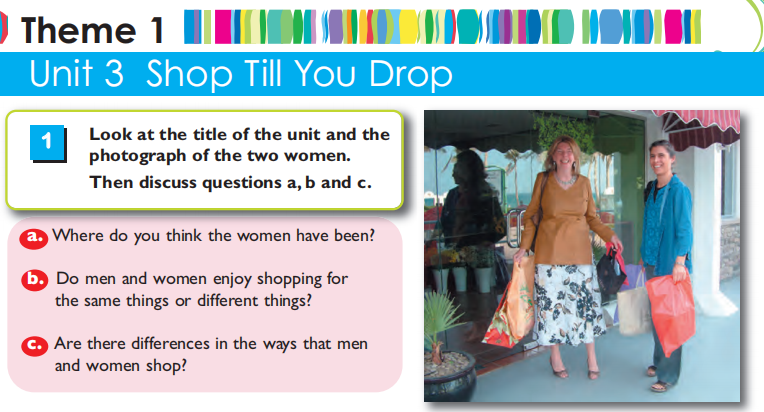
- a. Where do you think the women have been?
- الترجمة: أين تعتقد أن المرأتين كانتا؟
- الحل (Answer):
- English: They have been shopping at a mall or clothing stores, as they are holding several shopping bags.
- الترجمة: لقد كانتا تتسوقان في مجمع تجاري أو محلات ملابس، حيث تحملان عدة أكياس تسوق.
ب. السؤال الفرعي (b) والحل:
- b. Do men and women enjoy shopping for the same things or different things?
- الترجمة: هل يستمتع الرجال والنساء بالتسوق لنفس الأشياء أم لأشياء مختلفة؟
- الحل (Answer):
- English: Generally, they enjoy shopping for different things; women often prefer clothes, shoes, and cosmetics, while men might prefer electronics, sports gear, or tools.
- الترجمة: عمومًا، يستمتعون بالتسوق لأشياء مختلفة؛ فالنساء غالبًا ما يفضلن الملابس والأحذية ومستحضرات التجميل، بينما قد يفضل الرجال الإلكترونيات أو الأدوات الرياضية أو المعدات.
ج. السؤال الفرعي (c) والحل:
- c. Are there differences in the ways that men and women shop?
- الترجمة: هل هناك فروق في الطرق التي يتسوق بها الرجال والنساء؟
- الحل (Answer):
- English: Yes, women often spend more time browsing and looking for bargains, whereas men usually tend to buy what they need quickly and leave.
- الترجمة: نعم، غالبًا ما تقضي النساء وقتًا أطول في التصفح والبحث عن التخفيضات، بينما يميل الرجال عادةً إلى شراء ما يحتاجونه بسرعة والمغادرة.
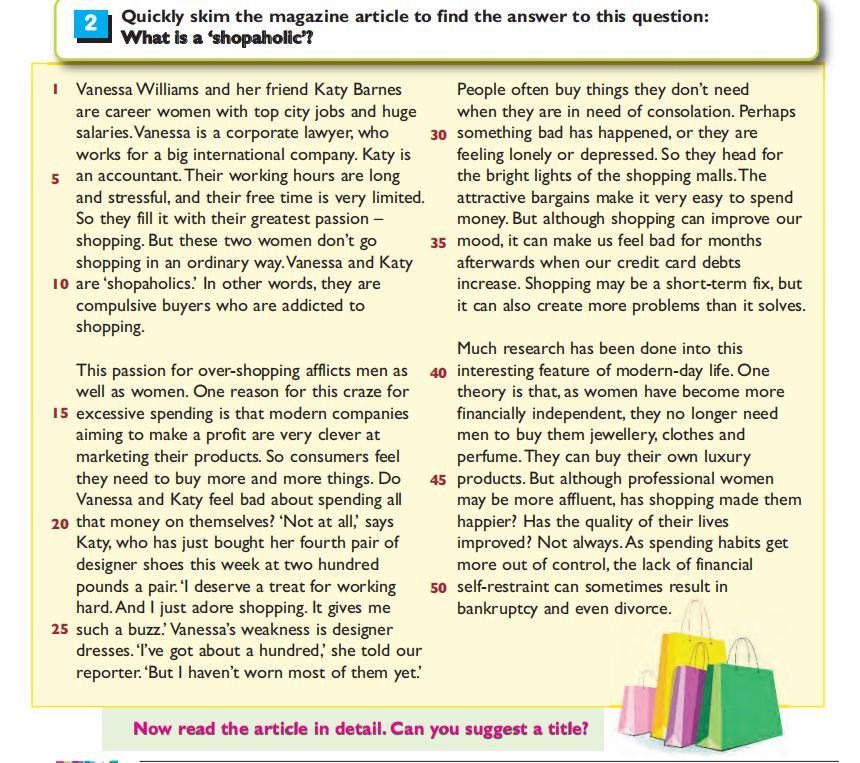
2. Quickly skim the magazine article to find the answer to this question: What is a ‘shopaholic’?
- الترجمة: اقرأ المقالة سريعا (تصفح سريع) لتجد إجابة هذا السؤال: من هو “مدمن التسوق” (Shopaholic)؟
الاجابة:
A shopaholic is someone who is a compulsive buyer who is addicted to shopping.
- الترجمة: مدمن التسوق (Shopaholic) هو شخص مشتري قهري مدمن على التسوق.
They can’t control the way they spend money when they are shopping.
- الترجمة: لا يمكنهم التحكم في الطريقة التي ينفقون بها الأموال عندما يتسوقون.
نص المقال (Magazine Article) — جملة بجملة:
- Vanessa Williams and her friend Katy Barnes are career women with top city jobs and huge salaries.
- الترجمة: فانيسا ويليامز وصديقتها كاتي بارنز امرأتان عاملتان تشغلان وظائف رفيعة في المدينة وتحصلان على رواتب ضخمة.
- Vanessa is a corporate lawyer, who works for a big international company.
- الترجمة: فانيسا محامية شركات تعمل لصالح شركة دولية كبيرة.
- Katy is an accountant.
- الترجمة: كاتي محاسبة.
- Their working hours are long and stressful, and their free time is very limited.
- الترجمة: ساعات عملهما طويلة ومجهدة، ووقت فراغهما محدود للغاية.
- So they fill it with their greatest passion – shopping.
- الترجمة: لذا تملآن وقت الفراغ بأعظم شغف لديهما – وهو التسوق.
- But these two women don’t go shopping in an ordinary way.
- الترجمة: ولكن هاتين المرأتين لا تذهبان للتسوق بطريقة عادية.
- Vanessa and Katy are ‘shopaholics.’
- الترجمة: فانيسا وكاتي “مدمنتا تسوق”.
- In other words, they are compulsive buyers who are addicted to shopping.
- الترجمة: بعبارة أخرى، هما مقتنيتان قهريتان معتادتان ومُدمنتان على التسوق.
- This passion for over-shopping afflicts men as well as women.
- الترجمة: هذا الشغف بالتسوق المفرط يصيب الرجال كما يصيب النساء.
- One reason for this craze for excessive spending is that modern companies aiming to make a profit are very clever at marketing their products.
- الترجمة: أحد أسباب هذا الهوس بالإنفاق المفرط هو أن الشركات الحديثة التي تهدف لجمع الأرباح ذكية جدًا في تسويق منتجاتها.
- So consumers feel they need to buy more and more things.
- الترجمة: لذلك يشعر المستهلكون بأنهم بحاجة لشراء المزيد والمزيد من الأشياء.
- Do Vanessa and Katy feel bad about spending all that money on themselves?
- الترجمة: هل تشعر فانيسا وكاتي بالشعور بالذنب أو السوء حيال إنفاق كل تلك الأموال على أنفسهما؟
- ‘Not at all,’ says Katy, who has just bought her fourth pair of designer shoes this week at two hundred pounds a pair.
- الترجمة: “ليس على الإطلاق”، تقول كاتي، التي اشترت للتو زوج الأحذية المصمم الرابع لها هذا الأسبوع بسعر مائتي جنيه إسترليني للزوج الواحد.
- ‘I deserve a treat for working hard.’
- الترجمة: “أنا أستحق مكافأة لنفسي بسبب عملي الشاق.”
- ‘And I just adore shopping.’
- الترجمة: “وأنا ببساطة أعشق التسوق.”
- ‘It gives me such a buzz.’
- الترجمة: “إنه يمنحني شعورًا رائعًا بالحماس والبهجة.”
- Vanessa’s weakness is designer dresses.
- الترجمة: نقطة ضعف فانيسا هي فساتين المصممين الشهيرة.
- ‘I’ve got about a hundred,’ she told our reporter.
- الترجمة: وقالت لمراسلنا: “لدي حوالي مائة فستان”.
- ‘But I haven’t worn most of them yet.’
- الترجمة: “لكنني لم أرتدِ معظمها بعد.”
- People often buy things they don’t need when they are in need of consolation.
- الترجمة: غالبًا ما يشتري الناس أشياء لا يحتاجونها عندما يكونون بحاجة إلى المواساة.
- Perhaps something bad has happened, or they are feeling lonely or depressed.
- الترجمة: ربما حدث شيء سيئ، أو أنهم يشعرون بالوحدة أو الاكتئاب.
- So they head for the bright lights of the shopping malls.
- الترجمة: لذلك يتجهون نحو الأضواء الساطعة للمجمعات التجارية.
- The attractive bargains make it very easy to spend money.
- الترجمة: التخفيضات والعروض المغرية تجعل من السهل جدًا إنفاق المال.
- But although shopping can improve our mood, it can make us feel bad for months afterwards when our credit card debts increase.
- الترجمة: ولكن على الرغم من أن التسوق يمكن أن يحسن مزاجنا، إلا أنه يمكن أن يجعلنا نشعر بالسوء لشهور بعد ذلك عندما تزداد ديون بطاقات الائتمان الخاصة بنا.
- Shopping may be a short-term fix, but it can also create more problems than it solves.
- الترجمة: قد يكون التسوق حلاً قصير الأجل، ولكنه قد يخلق أيضًا مشاكل أكثر مما يحل.
- Much research has been done into this interesting feature of modern-day life.
- الترجمة: أُجريت العديد من البحوث حول هذه الظاهرة/السمة المثيرة للاهتمام في الحياة المعاصرة.
- One theory is that, as women have become more financially independent, they no longer need men to buy them jewellery, clothes and perfume.
- الترجمة: إحدى النظريات هي أنه نظرًا لأن النساء أصبحن أكثر استقلالية مالياً، فلم يعدن بحاجة إلى الرجال ليجروا لهن المجوهرات والملابس والعطور.
- They can buy their own luxury products.
- الترجمة: يمكنهن شراء منتجاتهن الفاخرة بأنفسهن.
- But although professional women may be more affluent, has shopping made them happier?
- الترجمة: ولكن على الرغم من أن النساء العاملات قد يكنّ أكثر ثراءً، فهل جعلهن التسوق أكثر سعادة؟
- Has the quality of their lives improved?
- الترجمة: هل تحسنت جودة حياتهن؟
- Not always.
- الترجمة: ليس دائماً.
- As spending habits get more out of control, the lack of financial self-restraint can sometimes result in bankruptcy and even divorce.
- الترجمة: ومع خروج عادات الإنفاق عن السيطرة، فإن غياب ضبط النفس المالي يمكن أن يؤدي أحيانًا إلى الإفلاس وحتى الطلاق.
السؤال الموجود أسفل المقال
- Now read the article in detail. Can you suggest a title?
- الترجمة: الآن اقرأ المقال بالتفصيل. هل يمكنك اقتراح عنوان؟
- Shopping: A Modern Problem
- الترجمة: التسوق: مشكلة حديثة
- Is Shopping Bad For You?
- الترجمة: هل التسوق ضار بك؟
- The Dangers of Over-Shopping
- الترجمة: مخاطر التسوق المفرط
- An Unusual Addiction
- الترجمة: إدمان غير عادي
إليك استخراج النصوص، ترجمتها، وحل النشاط بناءً على الإجابات النموذجية:
رأس السؤال (Instruction)
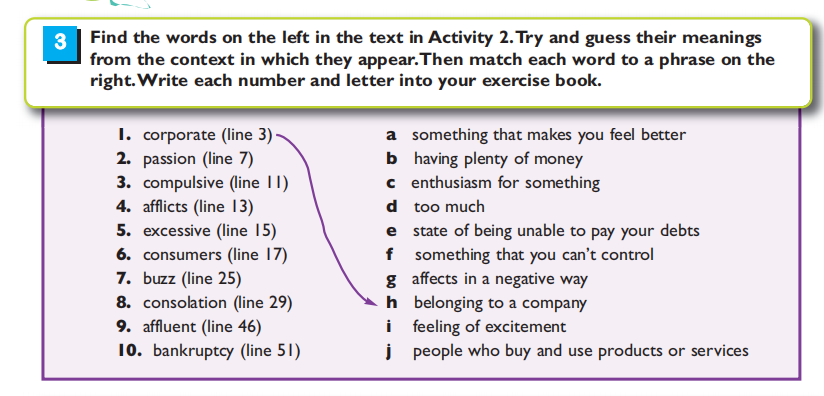
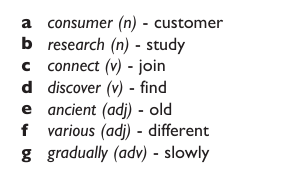
- 3. Find the words on the left in the text in Activity 2.
- الترجمة: ابحث عن الكلمات الموجودة على اليسار في النص في النشاط 2.
- Try and guess their meanings from the context in which they appear.
- الترجمة: حاول تخمين معانيها من السياق الذي تظهر فيه.
- Then match each word to a phrase on the right.
- الترجمة: ثم وصل كل كلمة بالعبارة المناسبة لها على اليمين.
- Write each number and letter into your exercise book.
- الترجمة: اكتب كل رقم والحرف المقابل له في دفتر التمارين الخاص بك.
الكلمات على اليسار (Left Words)
- corporate (line 3) — متعلق بالشركات / مؤسسي
- passion (line 7) — شغف / حماس شديد
- compulsive (line 11) — قهري / لا إرادي
- afflicts (line 13) — يصيب / يؤثر سلباً
- excessive (line 15) — مفرط / زائد عن الحد
- consumers (line 17) — مستهلكون
- buzz (line 25) — شعور بالحماس والإثارة
- consolation (line 29) — مواساة / تعزية
- affluent (line 46) — ثري / غني
- bankruptcy (line 51) — إفلاس
التعاريف على اليمين (Right Phrases)
- a. something that makes you feel better
- الترجمة: شيء يجعلك تشعر بتحسن (مواساة)
- b. having plenty of money
- الترجمة: امتلاك الكثير من المال (ثري)
- c. enthusiasm for something
- الترجمة: الحماس لشيء ما (شغف)
- d. too much
- الترجمة: كثير جداً / مفرط
- e. state of being unable to pay your debts
- الترجمة: حالة عدم القدرة على دفع ديونك (إفلاس)
- f. something that you can’t control
- الترجمة: شيء لا يمكنك التحكم فيه (قهري)
- g. affects in a negative way
- الترجمة: يؤثر بطريقة سلبية (يصيب/يبتلي)
- h. belonging to a company
- الترجمة: ينتمي إلى شركة / خاص بالشركات
- i. feeling of excitement
- الترجمة: شعور بالإثارة والحماس
- j. people who buy and use products or services
- الترجمة: الأشخاص الذين يشترون ويستخدمون المنتجات أو الخدمات (مستهلكون)
الحل النهائي (Answers)
- h : corporate = belonging to a company
- c : passion = enthusiasm for something
- f : compulsive = something that you can’t control
- g : afflicts = affects in a negative way
- d : excessive = too much
- j : consumers = people who buy and use products or services
- i : buzz = feeling of excitement
- a : consolation = something that makes you feel better
- b : affluent = having plenty of money
- e : bankruptcy = state of being unable to pay your debts
التعليمات والأمثلة العلمية:
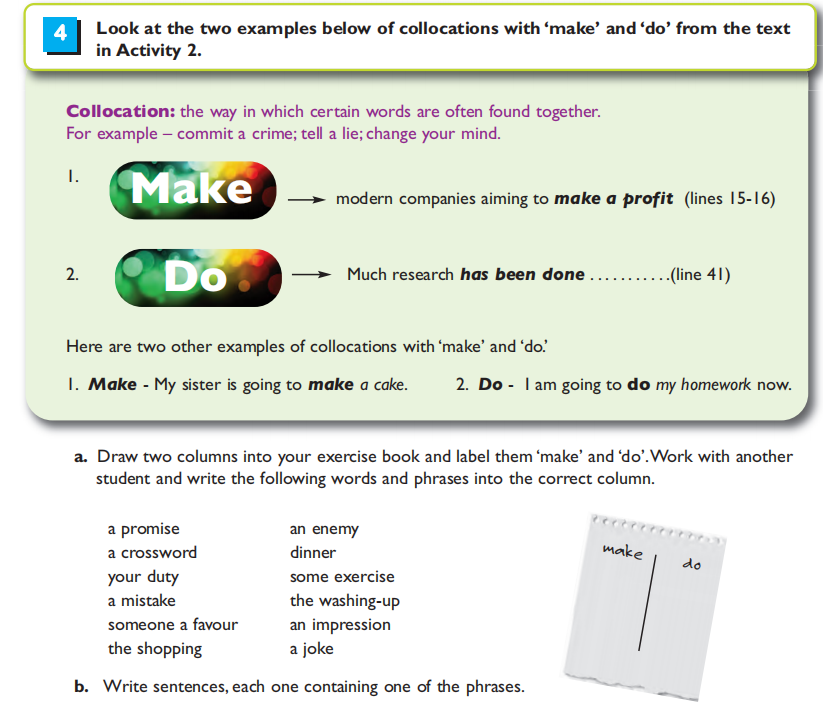
- 4. Look at the two examples below of collocations with ‘make’ and ‘do’ from the text in Activity 2.
- الترجمة: انظر إلى المثالين أدناه للمتلازمات اللفظية مع ‘make’ و ‘do’ من النص في النشاط 2.
- Collocation: the way in which certain words are often found together. For example – commit a crime; tell a lie; change your mind.
- الترجمة: المتلازمة اللفظية (Collocation): هي الطريقة التي تتواجد بها كلمات معينة غالباً مع بعضها البعض. على سبيل المثال: يرتقب جريمـة (commit a crime)؛ يكذب (tell a lie)؛ يغير رأيه (change your mind).
- 1. Make $\longrightarrow$ modern companies aiming to make a profit (lines 15-16)
- الترجمة: شركات حديثة تهدف إلى تحقق أرباحاً.
- 2. Do $\longrightarrow$ Much research has been done . . . . . . . . .(line 41)
- الترجمة: تم إجراء الكثير من البحوث.
- Here are two other examples of collocations with ‘make’ and ‘do.’
- الترجمة: إليك مثالين آخرين على المتلازمات اللفظية مع ‘make’ و ‘do’.
- 1. Make – My sister is going to make a cake.
- الترجمة: أختي ستصنع كعكة.
- 2. Do – I am going to do my homework now.
- الترجمة: أنا سأقوم بأداء واجبي المنزلي الآن.
الكلمات والعبارات المطلوب تصنيفها:
- a promise (وعد)
- a crossword (كلمات متقاطعة)
- your duty (واجبك)
- a mistake (خطأ)
- someone a favour (معروفاً لشخص ما)
- the shopping (التسوق)
- an enemy (عدواً)
- dinner (العشاء)
- some exercise (بعض التمارين)
- the washing-up (غسيل الأواني)
- an impression (انطباعاً)
- a joke (نكتة / مزحة)
أسئلة التمرين (a & b):
- a. Draw two columns into your exercise book and label them ‘make’ and ‘do’. Work with another student and write the following words and phrases into the correct column.
- الترجمة: ارسم عمودين في دفتر التمارين وسَمّهمـا ‘make’ و ‘do’. اعمل مع طالب آخر واكتب الكلمات والعبارات التالية في العمود الصحيح.
- b. Write sentences, each one containing one of the phrases.
- الترجمة: اكتب جملاً تحتوي كل منها على إحدى هذه العبارات.
2. الشرح (Explanation)
الشرح باللغة العربية:
- المتلازمات اللفظية (Collocations): هي كلمات تذهب معاً بشكل طبيعي في اللغة الإنجليزية.
- استخدام Make: نستخدم عادة الفعل Make عندما نتحدث عن الصنع، الإنشاء، أو الابتكار لشيء لم يكن موجوداً من قبل (مثل صنع الطعام، أو تكوين فكرة/علاقة)، وكذلك مع القرارات والوعود والأخطاء.
- استخدام Do: نستخدم عادة الفعل Do عندما نتحدث عن الأنشطة، المهام، الواجبات، والأعمال العامة التي لا نبتكر فيها شيئاً جديداً وإنما ننفذها فقط (مثل الواجبات المنزلية، التمارين، الغسيل، والتسوق).
English Explanation:
- Collocations are pairs or groups of words that naturally go together in the English language.
- Using ‘Make’: We generally use Make for creating, producing, or building something new that did not exist before (e.g., preparing food, making a promise, making a mistake, or making an impression).
- Using ‘Do’: We generally use Do for carrying out tasks, duties, jobs, actions, or routines where no physical new product is created (e.g., doing homework, doing exercise, doing the shopping, or doing a favour).
3. الحل بناءً على الإجابات النموذجية (Answers)
a. جدول التصنيف (Categorization Table):
| Make | Do |
| a promise | a crossword |
| a mistake | your duty |
| an enemy | someone a favour |
| dinner | the shopping |
| an impression | some exercise |
| a joke | the washing-up |
b. أمثلة على الجمل (Example Sentences):
- Make a promise: Always keep your promise when you make a promise.
- Make a mistake: It is okay to make a mistake as long as you learn from it.
- Make an enemy: Try to be kind so you don’t make an enemy.
- Make dinner: My mother is going to make dinner tonight.
- Make an impression: Wear nice clothes to make a good impression in the interview.
- Make a joke: He tried to make a joke to make us laugh.
- Do a crossword: I like to do a crossword in the morning newspaper.
- Do your duty: Every citizen should do their duty for their country.
- Do someone a favour: Could you do me a favour and lend me a pen?
- Do the shopping: We need to do the shopping this weekend.
- Do some exercise: I do some exercise every morning to stay healthy.
- Do the washing-up: I will help my sister do the washing-up after lunch.
حل وشرح كتاب النشاط Workbook
اولا اليك نص الاستماع مترجم بالعربي
إليك النص الإنجليزي متبوعاً بالترجمة العربية فقرة بفقرة لكل شخصية:
Presenter: Good morning and welcome to the Capital Gold Studio. Today, our guest is Dr. Michael Thrift, a consumer psychologist from the Department of Economics at the University of Boxford. Welcome, Dr. Thrift.
- الترجمة: صباح الخير وأهلاً بكم في استوديو كابيتال غولد. ضيفنا اليوم هو الدكتور مايكل ثريفت، عالم نفس المستهلك من قسم الاقتصاد بجامعة بوكسفورد. أهلاً بك دكتور ثريفت.
Dr. Thrift: Good morning.
- الترجمة: صباح الخير.
Presenter: Dr. Thrift is an expert in consumer buying behavior. If you have any questions regarding your shopping habits, feel free to call us. To start off, Dr. Thrift, could you explain your current research?
- الترجمة: الدكتور ثريفت خبير في سلوك الشراء لدى المستهلك. إذا كان لديكم أي أسئلة تتعلق بعادات التسوق الخاصة بكم، فلا تترددوا في الاتصال بنا. لنبدأ، دكتور ثريفت، هل يمكنك توضيح بحثك الحالي؟
Dr. Thrift: Certainly. I am studying a growing consumer issue in modern society known as over-shopping.
- الترجمة: بالتأكيد. أنا أدرس مشكلة استهلاكية متزايدة في المجتمع الحديث تُعرف بالإفرط في التسوق.
Presenter: What is the exact definition of over-shopping?
- الترجمة: ما هو التعريف الدقيق للإفراط في التسوق؟
Dr. Thrift: It refers to compulsive buying—a tendency where people purchase items they do not actually need.
- الترجمة: يشير إلى الشراء القهري—وهو ميل يشتري فيه الأشخاص أشياء لا يحتاجونها بالفعل.
Presenter: Pardon the interruption, Dr. Thrift, but we have our first caller. Good morning, caller. Could you please state your name?
- الترجمة: أعتذر عن المقاطعة دكتور ثريفت، ولكن لدينا أول متصل على الخط. صباح الخير، أيتها المتصلة. هل يمكنك إخبارنا باسمك لو سمحتِ؟
Susan: Good morning. My name is Susan Spender.
- الترجمة: صباح الخير. اسمي سوزان سبيندر.
Presenter: What brings you to call us today, Susan?
- الترجمة: ما الذي دفعك للاتصال بنا اليوم يا سوزان؟
Susan: To be honest, I do not believe I have a problem. My husband, who is standing next to me, insisted that I make this call.
- الترجمة: لكي أكون صريحة، أنا لا أعتقد أن لدي مشكلة. لكن زوجي، الذي يقف بجانبي الآن، هو من أصر على أن أجري هذا الاتصال.
Presenter: And what does your husband consider to be the issue?
- الترجمة: وما هي المشكلة من وجهة نظر زوجك؟
Susan: Well, I simply love shopping and buying things. It relaxes me and makes me feel good. However, my husband constantly asks why I spend money on unnecessary items.
- الترجمة: حسناً، أنا ببساطة أحب التسوق وشراء الأشياء. إنه يريحني ويجعلني أشعر بالارتياح. ومع ذلك، يسألني زوجي باستمرار لماذا أنفق المال على أشياء غير ضرورية.
Dr. Thrift: May I ask, Susan, what types of items do you usually enjoy purchasing?
- الترجمة: هل لي أن أسأل يا سوزان، ما هي أنواع الأشياء التي تستمتعين بشرائها عادةً؟
Susan: Just the usual items like clothes, handbags, and jewellery—anything in fashion. I also have a strong passion for shoes.
- الترجمة: فقط الأشياء المعتادة مثل الملابس، وحقائب اليد، والمجوهرات—أي شيء مواكب للموضة. كما أن لدي شغفاً كبيراً بالأحذية.
Dr. Thrift: How many pairs of shoes do you currently own?
- الترجمة: كم زوجاً من الأحذية تمتلكين حالياً؟
Susan: Around two hundred pairs. I do not wear all of them, and I buy them in various sizes. They are stored in boxes in our spare bedroom, and my husband often complains that they occupy too much space.
- الترجمة: حوالي مائتي زوج. أنا لا أرتديها جميعاً، وأشتريها بمقاسات مختلفة. وهي مخزنة في صناديق في غرفة النوم الإضافية، وزوجي يشكو غالباً من أنها تشغل مساحة كبيرة جداً.
Dr. Thrift: In other words, Susan, you are exhibiting habits of a shopaholic.
- الترجمة: بعبارة أخرى يا سوزان، أنتِ تظهرين عادات مدمنة التسوق.
Susan: A shopaholic? What does that mean? Is it a type of condition?
- الترجمة: مدمنة تسوق؟ ماذا يعني ذلك؟ هل هذه حالة مرضية؟
Dr. Thrift: A shopaholic is an individual addicted to shopping. Similarly, a chocoholic is addicted to chocolate, and a workaholic is addicted to work. In your situation, it points toward Compulsive Shopping Disorder. You buy more than necessary and likely spend beyond your financial means.
- الترجمة: مدمن التسوق هو شخص مدمن على التسوق. وبالمثل، مدمن الشوكولاتة مدمن على الشوكولاتة، ومدمن العمل مدمن على العمل. في حالتكِ، هذا يشير إلى اضطراب التسوق القهري. أنتِ تشترين أكثر من اللازم ومن المرجح أنك تنفقين أكثر من قدرتك المالية.
Susan: Yes, but I enjoy shopping immensely. I like every part of it—from withdrawing money at the ATM to buying new things, and even removing the price tag once I get home.
- الترجمة: نعم، ولكنني أستمتع بالتسوق كثيراً. أحب كل جزء فيه—من سحب الأموال من الصراف الآلي إلى شراء أشياء جديدة، وحتى نزع بطاقة السعر بمجرد وصولي إلى المنزل.
Dr. Thrift: While that may be true, it serves only as a temporary fix that boosts your mood for a short duration. In the long run, it can cause negative effects for months, leading to credit card debt, depression, anxiety, and even broken relationships.
- الترجمة: رغم أن هذا قد يكون صحيحاً، إلا أنه يعد حلاً مؤقتاً يحسن مزاجك لفترة قصيرة فقط. وعلى المدى الطويل، يمكن أن يسبب آثاراً سلبية لشهور، مما يؤدي إلى ديون بطاقات الائتمان، والاكتئاب، والقلق، وحتى انهيار العلاقات.
Susan: However, it is my main source of pleasure, and I cannot simply give it up!
- الترجمة: ومع ذلك، فإنه مصدري الرئيسي للمتعة، ولا يمكنني ببساطة التخلي عنه!
استخراج نصوص التمرين الأول والحل (Activity 1)
رأس السؤال:
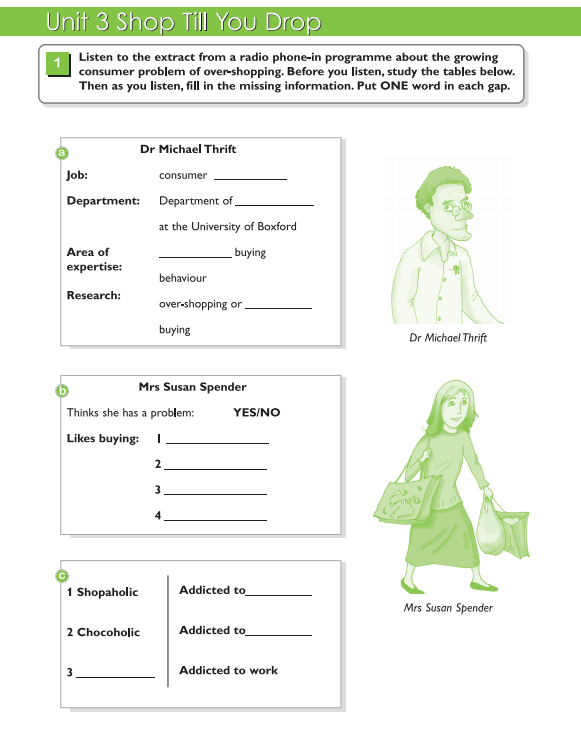
- Listen to the extract from a radio phone-in programme about the growing consumer problem of over-shopping. Before you listen, study the tables below. Then as you listen, fill in the missing information. Put ONE word in each gap.
- الترجمة: استمع إلى المقطع المأخوذ من برنامج إغلاق إذاعي حول مشكلة المستهلك المتزايدة المتمثلة في الإفراط في التسوق. قبل الاستماع، ادرس الجداول أدناه. ثم أثناء الاستماع، املأ الفراغات بالمعلومات المفقودة. ضع كلمة واحدة في كل فراغ.
القسم (a): بيانات الدكتور مايكل ثريفت (Dr Michael Thrift)
- Job: consumer psychologist
- الترجمة: الوظيفة: عالم نفس المستهلك
- Department: Department of Economics at the University of Boxford
- الترجمة: القسم: قسم الاقتصاد في جامعة بوكسفورد
- Area of expertise:consumer buying behaviour
- الترجمة: مجال الخبرة: سلوك الشراء لدى المستهلك
- Research: over-shopping or compulsive buying
- الترجمة: البحث: الإفراط في التسوق أو الشراء القهري
القسم (b): بيانات السيدة سوزان سبيندر (Mrs Susan Spender)
- Thinks she has a problem:NO
- الترجمة: هل تعتقد أن لديها مشكلة؟ لا (حسب قولها: I don’t think I have a problem)
- Likes buying:
- clothes (الملابس)
- handbags (حقائب اليد)
- jewellery (المجوهرات)
- shoes (الأحذية)
القسم (c): مصطلحات الإدمان (Addictions)
- Shopaholic : Addicted to shopping
- الترجمة: مدمن تسوق: مدمن على التسوق
- Chocoholic : Addicted to chocolate
- الترجمة: مدمن شوكولاتة : مدمن على الشوكولاتة
- Workaholic : Addicted to work
- الترجمة: مدمن عمل: مدمن على العمل
اليك الاجابات مرة اخرى
a. Dr Michael Thrift
- Job: consumer psychologist
- Department: Department of Economics at the University of Boxford
- Area of expertise: consumer buying behaviour
- Research: over-shopping or compulsive buying
b. Mrs Susan Spender
- Thinks she has a problem: NO (ضع دائرة حول كلمة NO)
- Likes buying:
- clothes
- handbags
- jewellery
- shoes
c. Addictions
- Shopaholic : Addicted to shopping
- Chocoholic : Addicted to chocolate
- Workaholic : Addicted to work
إليك استخراج النص الإنجليزي بالكامل، والترجمة العربية، والحل المطلوب بناءً على نموذج الإجابات :
1. رأس السؤال والتعريف (Instruction & Definition)
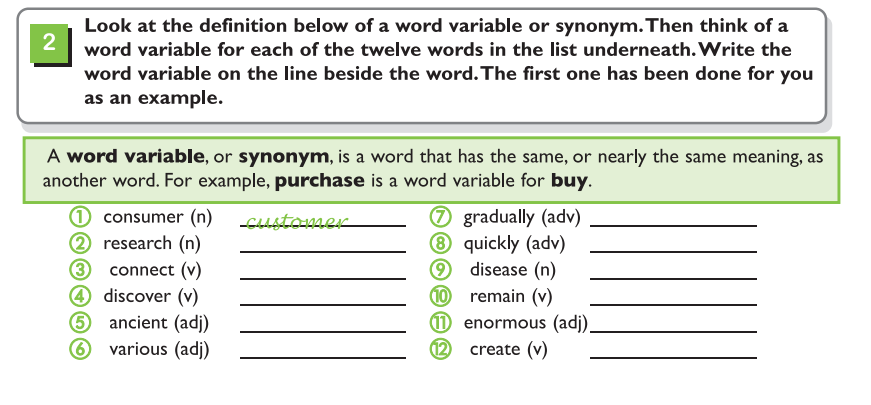
- English: 2. Look at the definition below of a word variable or synonym. Then think of a word variable for each of the twelve words in the list underneath. Write the word variable on the line beside the word. The first one has been done for you as an example.
- الترجمة: انظر إلى التعريف أدناه لمتغير الكلمة (مرادف الكلمة). ثم فكر في مرادف لكل كلمة من الكلمات الاثنتي عشرة الموجودة في القائمة أدناه. اكتب المرادف على السطر المخصص بجانب الكلمة. تم حل الكلمة الأولى كـ مثال لك.
- English: A word variable, or synonym, is a word that has the same, or nearly the same meaning, as another word. For example, purchase is a word variable for buy.
- الترجمة: متغير الكلمة، أو المرادف، هو كلمة لها نفس المعنى تقريبًا لكلمة أخرى. على سبيل المثال، كلمة (purchase) هي مرادف لكلمة (buy).
2. الكلمات مع الترجمة والحل النموذجي (Words, Translation & Answers)
- consumer (n)
- الترجمة: مستهلك (اسم)
- الحل (Synonym): customer (زبون / عميل)
- research (n)
- الترجمة: بحث (اسم)
- الحل (Synonym): study (دراسة)
- connect (v)
- الترجمة: يربط / يصل (فعل)
- الحل (Synonym): join (يضم / يربط)
- discover (v)
- الترجمة: يكتشف (فعل)
- الحل (Synonym): find (يجد)
- ancient (adj)
- الترجمة: قديم جداً / أثري (صفة)
- الحل (Synonym): old (قديم)
- various (adj)
- الترجمة: متنوع / مختلف (صفة)
- الحل (Synonym): different (مختلف)
- gradually (adv)
- الترجمة: تدريجياً (ظرف)
- الحل (Synonym): slowly (ببطء)
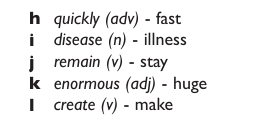
- quickly (adv)
- الترجمة: بسرعة (ظرف)
- الحل (Synonym): fast (سريع / بسرعة)
- disease (n)
- الترجمة: مرض (اسم)
- الحل (Synonym): illness (مرض)
- remain (v)
- الترجمة: يبقى / يظل (فعل)
- الحل (Synonym): stay (يبقى)
- enormous (adj)
- الترجمة: ضخم جداً (صفة)
- الحل (Synonym): huge (هائل / ضخم)
- create (v)
- الترجمة: ينشئ / يخلق (فعل)
- الحل (Synonym): make (صنع / يجعل)
نموذج الاجابة
رأس السؤال (Instruction)
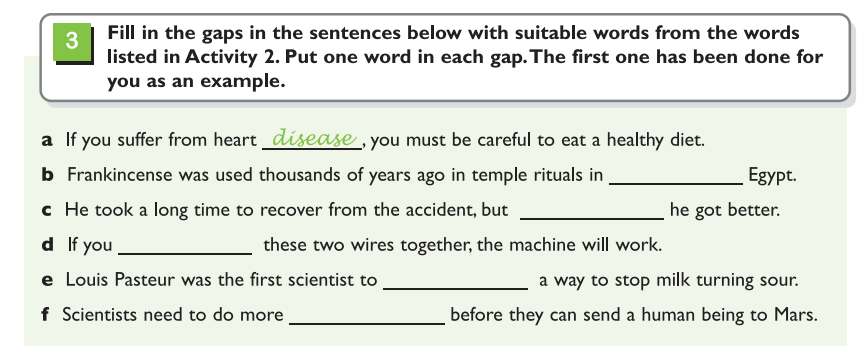
- English: Fill in the gaps in the sentences below with suitable words from the words listed in Activity 2. Put one word in each gap. The first one has been done for you as an example.
- الترجمة: املأ الفراغات في الجمل أدناه بكلمات مناسبة من الكلمات المدرجة في النشاط 2. ضع كلمة واحدة في كل فراغ. تم حل الجملة الأولى كـ مثال لك.
الجمل كاملة بعد الإكمال والترجمة (Completed Sentences & Translation)
a.
- النص المكتمل (English): If you suffer from heart disease, you must be careful to eat a healthy diet.
- الترجمة (Arabic): إذا كنت تعاني من مرض القلب، فيجب عليك الحرص على تناول نظام غذائي صحي.
b.
- النص المكتمل (English): Frankincense was used thousands of years ago in temple rituals in ancient Egypt.
- الترجمة (Arabic): تم استخدام اللبان منذ آلاف السنين في طقوس المعابد في مصر القديمة.
c.
- النص المكتمل (English): He took a long time to recover from the accident, but gradually he got better.
- الترجمة (Arabic): استغرق الأمر منه وقتاً طويلاً للتعافي من الحادث، لكنه تحسن تدريجياً.
d.
- النص المكتمل (English): If you connect these two wires together, the machine will work.
- الترجمة (Arabic): إذا قمت بربط هذين السلكين معاً، فستعمل الآلة.
e.
- النص المكتمل (English): Louis Pasteur was the first scientist to discover a way to stop milk turning sour.
- الترجمة (Arabic): كان لويس باستور أول عالم يكتشف طريقة لمنع الحليب من أن يصبح حامضاً.
f.
- النص المكتمل (English): Scientists need to do more research before they can send a human being to Mars.
- الترجمة (Arabic): يحتاج العلماء إلى إجراء المزيد من البحوث قبل أن يتمكنوا من إرسال إنسان إلى كوكب المريخ.
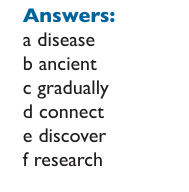
الاجابات مرتبة
📱 تابعنا على واتساب: اضغط هنا
إليك استخراج النصوص الإنجليزية بالكامل، وترجمتها إلى اللغة العربية، مع حل لغز الكلمات المتقاطعة المعتمد على نموذج الإجابات المرفق:
1. رأس السؤال (Instruction)
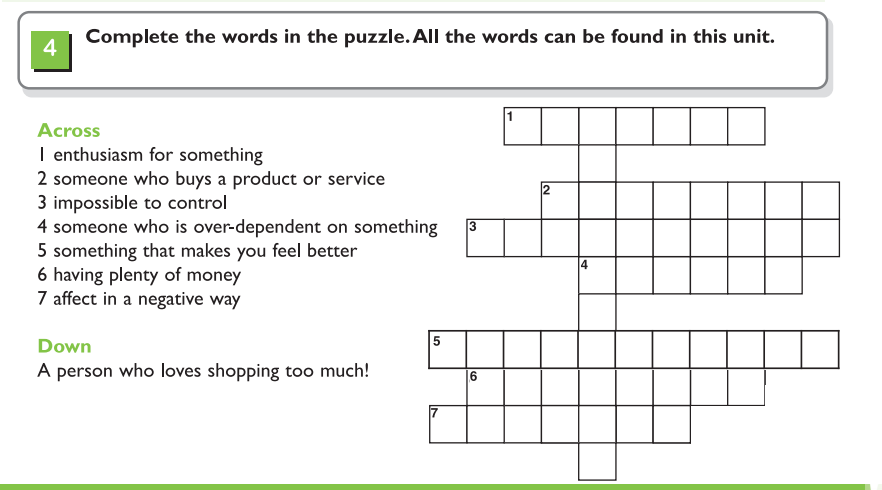
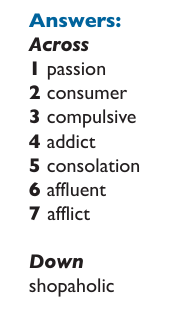
- English: 4. Complete the words in the puzzle. All the words can be found in this unit.
- الترجمة: أكمل الكلمات في اللغز. يمكن العثور على جميع الكلمات في هذه الوحدة.
2. الكلمات الأفقية (Across)
- English: enthusiasm for something
- الترجمة: الحماس لشيء ما
- الحل (Answer): passion (شغف)
- English: someone who buys a product or service
- الترجمة: شخص يشتري منتجاً أو خدمة
- الحل (Answer): consumer (مستهلك)
- English: impossible to control
- الترجمة: من المستحيل التحكم فيه
- الحل (Answer): compulsive (قهري)
- English: someone who is over-dependent on something
- الترجمة: شخص يعتمد بشكل مفرط على شيء ما (معتمد كلياً عليه)
- الحل (Answer): addict (مدمن)
- English: something that makes you feel better
- الترجمة: شيء يجعلك تشعر بتحسن
- الحل (Answer): consolation (مواساة)
- English: having plenty of money
- الترجمة: امتلاك الكثير من المال
- الحل (Answer): affluent (ثري)
- English: affect in a negative way
- الترجمة: يؤثر بطريقة سلبية
- الحل (Answer): afflict (يصيب / يبتلي)
3. الكلمة الرأسية (Down)
- English: A person who loves shopping too much!
- الترجمة: شخص يحب التسوق كثيراً جداً!
- الحل (Answer): shopaholic (مدمن تسوق)
اترك تعليقاً